
A new handling system gets installed. It runs exactly the way the quote intended. But something’s off. It’s not hitting the numbers, and new bottlenecks have emerged.
That happens more often than anyone wants to admit, and the equipment is rarely the cause. Usually something went unasked during the quote.
Here is why that matters more with automation than with anything else you have bought. A person at a saw handles the odd piece without thinking about it. They see a board that’s a little off. They turn it, set it aside, and adjust. Automated equipment does exactly what it was designed to do, which is the entire point and also the risk. Every variation that doesn’t come up during the quote becomes a stoppage later.
So the questions below are mostly about variation and handoffs, because that is where automation projects fall short of what was quoted. Here are seven questions to ask any vendor before you commit, whether you are running pallet board through a cut-off line or moving aluminum extrusion off a saw.
Pay attention to how a vendor answers and what they ask you. A vendor who doesn’t ask for much information about your operation will learn it too late.
1. What Happens When Material Comes Through at the Far End of My Size Range?
Quotes get built around typical material. An operator absorbs the outliers. Automated equipment doesn’t, so the edge of your range is where the line stops.
Give the vendor your full material range, not simply the average. In wood, nominal and actual differ before you account for species, moisture, and crook. In metals, it is usually product mix: bar, tube, extrusion, and structural shapes running through the same sequence.
Also ask what happens if your material changes, such as a shift from hardwood to softwood or an alloy you have not run before. Can the automated system adapt to those changes? A vendor who brushes that question aside is quoting only for today.
2. How Does Your Equipment Hold Up to Dirty, Wet, Scaled, Oiled, or Hot Material?
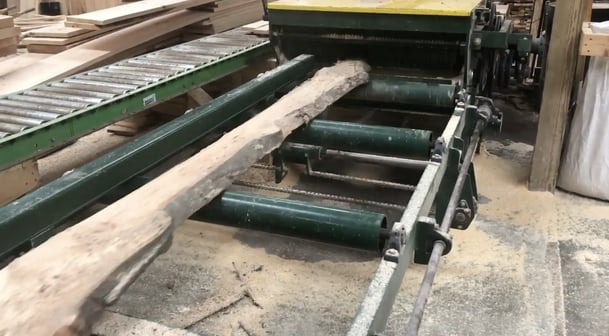
What is on your material, and what collects in the air around it, determines whether a system runs for years or becomes a maintenance problem fast.
In a mill, that means dust, bark, and chip buildup, and whether anyone has time to clean it out. In metals, ask about heat, scale, oil, and coolant. Ask whether the components near the material are rated for those conditions, not only the surfaces that touch it. That is a common failure point.
3. How Much of This Line Can You Handle, and What Are You Leaving to Me?
Some upgrades involve one machine, while others cover an entire section of the line. Either way, find out where the vendor’s scope ends, because anything outside it becomes your responsibility.
If you need the infeed and outfeed built too, ask whether they do that work or subcontract it. If you only need the machine, ask what is required on both ends so you know whether your existing equipment can deliver.
Ask about waste in the same conversation. Slabs and sawdust in a sawmill. Drops, offcuts, and leftover bundles in metals. Either way, it has to go somewhere, and waste handling has to keep up with production, or it becomes the bottleneck you just spent money to remove. If nobody owns it, your people move it by hand, which undoes part of what you automated for.
4. How Does Your System Handle the Way My Material Arrives and the Way It Has to Leave?
Most people skip this question, and it affects the design more than anything else.
A person at a station reorients material without being told. Automated equipment has to be built around the orientation it will actually receive, so have these details ready to share:
- The direction the material faces when it arrives and the direction it needs to face when it leaves
- Whether the material arrives one piece at a time or in bundles
- Whether the material arrives at a steady rate or in surges
The vendor needs all of it before they can answer the question.
Be cautious if a vendor answers this with a size chart or a speed tier. Two operations running similar volume can need entirely different equipment because the material behaves differently between machines. If a recommendation arrives before the vendor understands how your material moves, it is a catalog answer to a question that is not a catalog question.
5. Will This Work Within My Existing Ceiling Height, Columns, Floor Layout, and Power Supply?
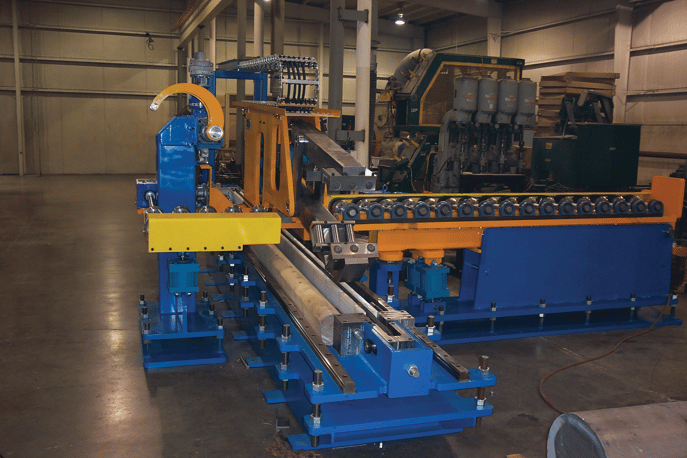
Bring your actual numbers. These four constraints eliminate options before anyone draws anything.
If you are building new, bring a vendor in before the slab is poured. Equipment laid into the floor plan at that stage is the least expensive planning you will do on the project, and it is when firewall and code issues are easiest to resolve. Moving a column on paper costs nothing.
6. What Does It Take to Run This Day to Day?
Most operations automate because hiring is difficult, so the real issue is whether your existing people can run the system. This is a design question, not a people question.
That shows up in three places, and each one has a number attached. Ask for it.
- Changeovers: ask how long a product change takes and whether settings are stored or re-entered by hand. A system running stored presets changes over in under a minute. One that gets re-entered by hand costs you that time on every run, every shift.
- Jams: ask who clears a typical jam and how long it takes. Can an operator spend two minutes clearing it, or does it require a maintenance call? The difference between the two is what compounds over a year.
- Daily maintenance: ask what the routine takes in minutes and measure it against the time your crew actually has. If maintenance doesn’t fit the schedule, it usually doesn’t happen.
Automation that requires more skill than you can hire for hasn’t solved the labor problem; it moved it. Your operators will spot the difference faster than anyone else in the building, so bring them in before you buy, not at startup.
7. Will This Work With the Equipment I Already Have, and If It Doesn’t, Who Fixes It?
Most automation drops into an existing line. The new equipment has to take material from upstream, hand it off downstream, and work with controls already in the building. Each one is a place where a machine that performs exactly as specified can still fail to produce.
The physical handoffs are the easier half. Controls are where projects stall. Find out who is programming the new equipment to work with the controls you already have: the vendor or your own people. Timing is the part nobody plans for. Two machines can each work correctly and still hand material off at the wrong moment, backing pieces up or feeding them before the next machine is ready.
One thing worth noticing early: whether the vendor will look at your line before quoting it. Quoting integration over the phone and from a drawing leaves unknowns, and they become your problem at installation.
Then run the what-ifs
Before you commit, put three scenarios in front of the vendor and have them walk you through how each one will affect the system:
- Your volume doubles
- A machine in the middle goes down
- You add a shift
Ask the same three again if anything about the project changes. Catching a potential problem on a drawing costs far less to fix than catching it after the equipment is on your floor.
The checklist
- What happens when material comes through at the far end of my size range?
- How does your equipment hold up to dirty, wet, scaled, oiled, or hot material?
- How much of this line can you handle, and what are you leaving to me?
- How does your system handle the way my material arrives and the way it has to leave?
- Will this work within my existing ceiling height, columns, floor layout, and power supply?
- What does it take to run this day to day?
- Will this work with the equipment I already have, and if it doesn’t, who fixes it?
Then ask what the system does if volume doubles, if a machine in the middle goes down, or if you add a shift.
This Is Where Every Pendu System Starts
The answers to the checklist affect the design, so Pendu works through them with you from the very beginning. Every system starts with your material, floor layout, throughput requirements, and what happens downstream.
That is how a five-module hydraulic truss stacker ends up handling over 100' trusses, retrofitted into a line the customer already had. New Holland, PA, handles engineering, fabrication, machining, controls, assembly, and startup under one roof. Most of the people doing that work have been here 20 years or more, so the person who designs your line is still the one who knows it at startup.
Bring us your answers to these seven questions. Let’s talk specs.